
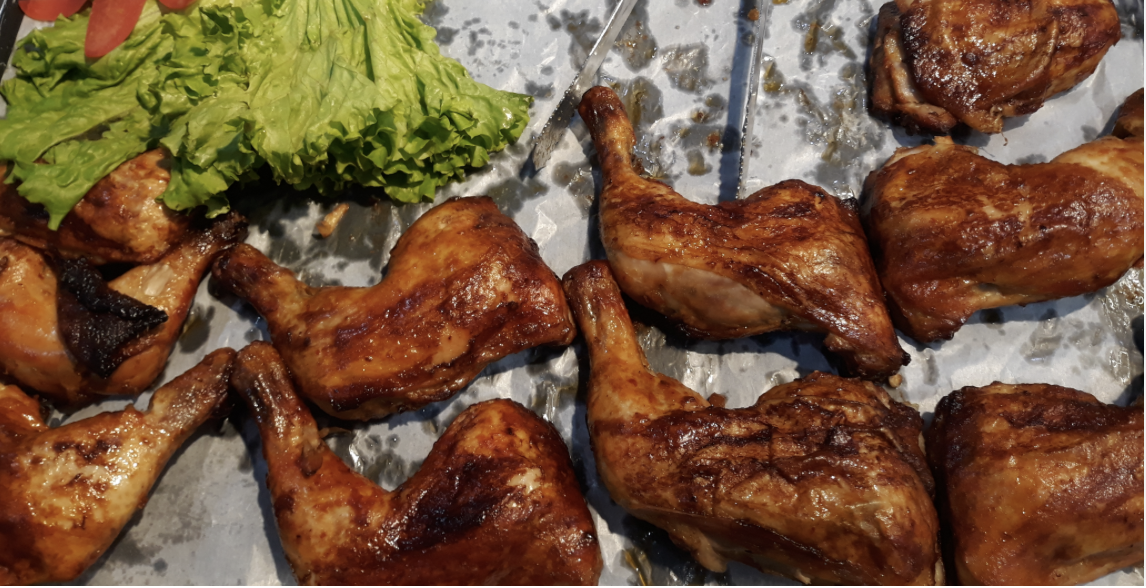
Despite significant price increases in recent years, leg quarters still appear cheaper on a relative basis to other animal proteins.
Historically speaking, chicken products have been consistently cheaper than other animal protein markets, including the category's two biggest rivals, beef and pork.
While that narrative has been leaned on repeatedly by industry stakeholders as something of a value proposition to the general public, it has seemingly quieted down in recent years in the wake of an inflationary burst across the front half of the bird. At various points since early 2021, boneless skinless (b/s) breast meat, tenderloins and whole wings have all topped US$3.00 per pound on a wholesale basis, and for b/s breast meat and tenderloins, that included flirtations with the US$3.50 mark, according to data from the U.S. Department of Agriculture (USDA).
While the back half of the bird has also appreciated recently, the competitive advantage chicken holds over other animal proteins is more apparent in these product channels.
Leg quarters surge
Fallout from an imploding export program in 2015 — set in motion initially by U.S. and Russia formally cutting trade ties the previous year and exacerbated by trade restrictions implemented the following year in response to a historic outbreak of highly pathogenic avian influenza — left the leg quarter market reeling.
Bulk, fresh leg quarter prices averaged just US$0.26 per pound on a wholesale basis that year according to the USDA. That represented a 45% decline from the 2011-14 average of approximately US$0.47 per pound. The leg quarter market perked up a little in the years immediately following that downturn but was unable to climb above the mid-US$0.30s on an annual average basis. That included a slump to just US$0.27 per pound overall in 2020.
Remarkably, the leg quarter market has appreciated every year since then, averaging more than US$0.52 per pound in 2025. That represented a new all-time high, at least in nominal terms, for the leg quarter market and a whopping 93% increase from the average just five years prior.
Relative advantage persists
An increase of that magnitude would seemingly remove some of the luster from the bone-in dark meat complex and its reputation for relative affordability, but price trends in those other protein categories reveal that isn't necessarily true.
Over the past three years, the wholesale leg quarter market has averaged approximately 15% of the wholesale choice beef cutout value. While that is up from lows on either side of 11% during 2015 and 2020, it is consistent with most other readings from the past decade and well short of averages on either side of 25% from the early 2010s.
The edge isn't quite as glaring against pork, as leg quarter prices have averaged more than 50% of the wholesale pork cutout value over the past two years. That compares to averages on either side of 35% as recently as 2020-21; however, it's not out of line with historical observations and even falls short of some readings from the past.
Consumers may not be thrilled by rising protein prices but can take some comfort knowing that budget-friendly options exist, chief among them being bone-in cuts of chicken dark meat.
.png)