
Four-week broiler production cycles drive poultry efficiency in the Middle East
The 28-day broiler production cycle has become a defining feature of poultry production across much of the Middle East, driven by consumer preferences, economic efficiency and regional production conditions rather than supply limitations. Consumers in many countries prefer smaller birds weighing 1.3–1.6 kg live weight, which are well suited to local retail and foodservice markets.
The shorter production cycle also allows producers to raise nine to ten flocks per year, compared with six or seven flocks under traditional 42-day production systems. This improves the utilization of modern poultry houses and increases return on investment. In countries such as Saudi Arabia, the strategy also supports national efforts to increase poultry self-sufficiency under Vision 2030.
Feed remains the industry's largest production cost, accounting for roughly 70% of total expenses. Harvesting birds at 28 days enables producers to take advantage of optimal feed conversion rates before feed efficiency begins to decline as birds age. Because there is little time to compensate for early setbacks, the first week of life is considered the most critical period, requiring careful attention to brooding, nutrition, gut development and early access to feed and water.
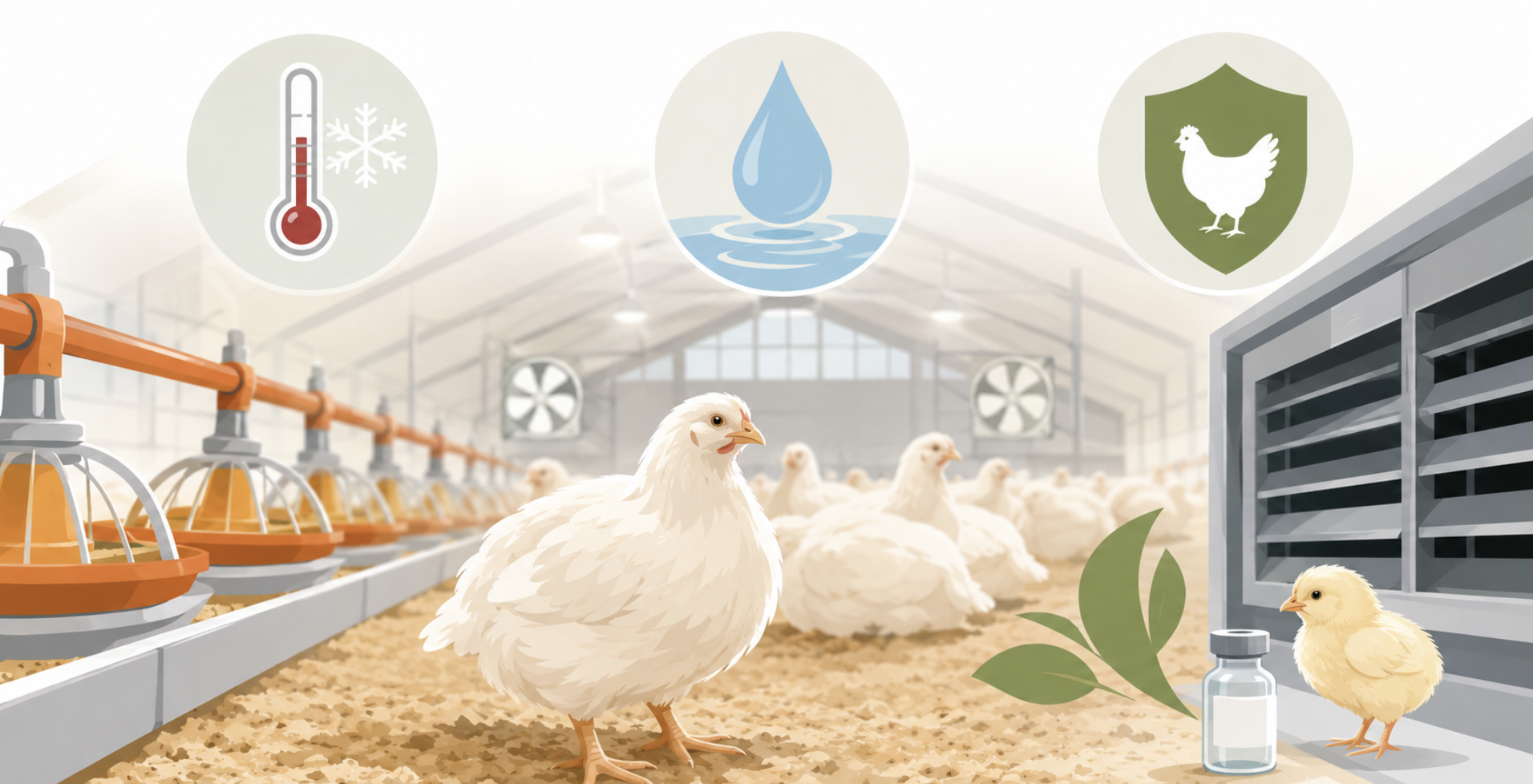
Extreme climatic conditions also favor shorter production cycles. Summer temperatures in parts of the Gulf region can reach 50–55°C, making cooling costs a significant expense. Producing lighter birds reduces the time houses require intensive cooling, lowering energy consumption while maintaining productivity. Modern climate-controlled poultry houses and automated management systems have become essential investments across the region, helping producers achieve consistent performance despite harsh environmental conditions.
The report also highlights the growing importance of gut health, water quality and responsible antibiotic use. While antibiotic growth promoters are still used in many Middle Eastern countries, producers are increasingly adopting probiotics, synbiotics and improved management practices, particularly during the first week of life. Several countries, including Jordan, Saudi Arabia and the United Arab Emirates, are introducing stricter regulations on antibiotic use in response to changing consumer expectations.
Water quality presents another important challenge, especially in Gulf countries where water tends to be hard and alkaline. Combined with high temperatures and humidity, these conditions increase the risk of biofilm formation in drinking systems, making continuous monitoring and water sanitation essential components of flock health management.
Vaccination strategies are also evolving to match shorter production cycles. Increasingly, producers are relying on in-ovo, hatchery and day-old chick vaccination programs to establish immunity early, before birds enter the rapid growth phase.
Saudi Arabia continues to make substantial investments in poultry production, with self-sufficiency currently estimated at 70–72%. Government support, including investments of approximately 17 billion Saudi riyals, together with modern housing, automation and improvements in breeding infrastructure, are expected to further strengthen domestic production, although dependence on imported feed ingredients and breeding stock remains a significant challenge.
Industry experts conclude that success in Middle Eastern poultry production depends on optimizing the first week of bird life, maintaining excellent water quality, implementing effective climate control and ventilation systems, and continuing investment in modern production technologies. These measures enable producers to achieve excellent feed conversion—even under some of the world's most challenging production conditions.
.png)