
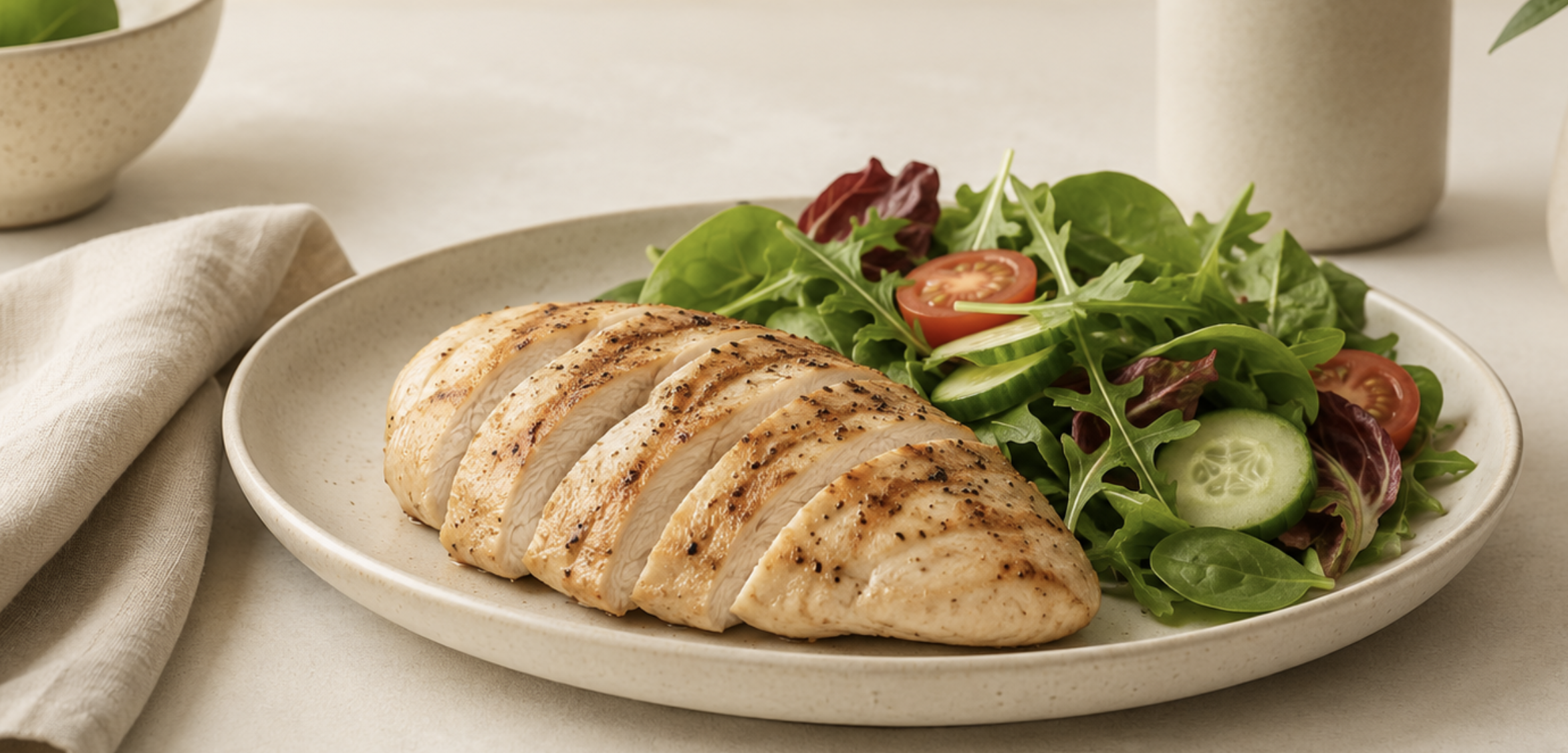
Affordability, versatility and clean-label credibility give chicken an edge during this protein moment, but overprocessing and under-marketing could squander it.
The convergence of aging demographics, fitness culture and GLP-1 weight loss drugs is fueling a surge in high-protein eating, and chicken stands to benefit more than any other protein. "It feels a little bit almost like the Atkins diet of 20 or 30 years ago," said Hinda Mitchell, president and founder of communications and marketing firm Inspire. "But it’s a combination of factors. There are different segments, different audiences that are thinking about protein." Chicken is uniquely positioned to lead this shift. Affordability, versatility and near-universal cultural acceptance give it advantages that other proteins simply cannot match, Mitchell said.
"There aren’t dietary barriers. There aren’t cultural barriers," she added. "Whether you’re cooking for your senior citizen grandmother or your 2-year-old, chicken fits a lot of diets and a lot of lifestyles." The Make America Healthy Again (MAHA) movement adds further tailwind. Its emphasis on real, minimally processed food aligns naturally with chicken’s clean-label profile. In January 2026, U.S. Health and Human Services Secretary Robert F. Kennedy Jr. released new dietary guidelines for Americans that prioritizes protein at every meal.
"We’re seeing so much emphasis through MAHA on the ‘eat real food’ movement. As you think about eating real food and you think about the spaces where protein is starting to elevate, animal products like chicken are a great solution if that is your commitment to clean eating and real food eating," Mitchell said.
Growing GLP-1 drug use is another driver of demand for nutrient-dense, high-protein foods. People using GLP-1 medications for weight management face side effects including muscle mass loss and hair loss, making adequate protein intake particularly important for that population.
Foodservice operators have been quickest to capitalize on the protein moment.
Chipotle’s branded high-protein menu, McDonald’s return of its low-carb snack wraps and Subway’s protein-focused menu additions are all examples of chains leveraging chicken they already had on the menu. Retail is rapidly catching up, particularly in the snacking category. New products, such as bacon-maple flavored chicken sticks marketed as grab-and-go breakfast items, are evidence that chicken is expanding into new dayparts and consumption occasions.
"Opportunity is just really booming with the new innovations that are happening with snack and convenience, but chicken again has always been such an approachable item. I think this is chicken’s time to shine," she said. Despite the opportunity, Mitchell cautioned the industry against overprocessing new product formats. She described an emerging risk she calls "protein washing," a parallel to greenwashing, where heavily processed products undermine the clean-label credibility that makes chicken compelling in the first place.
"Even as we are innovating and building out new ways to offer more products that speak to the high-protein market, we have to be equally mindful of not going into so much processing that we lose one (attribute) to gain another," she said. Maintaining consumer trust, she added, will be just as critical as grams of protein — particularly among shoppers scrutinizing sustainability, animal welfare and ingredient transparency.
How chicken wins the weeknight
But capitalizing on that opportunity requires more than new product formats. It requires meeting consumers where they actually cook, and that means making chicken feel less like a chore and more like a solution. "It’s definitely not going anywhere in terms of our focus on protein," said Amber Pankonin, RDN, an award-winning nutrition educator and chef. "In fact, I think we’re going to see even more of a shift."
The result has been a marketplace flooded with high-protein product claims across nearly every food category, from cereals and chips to coffee drinks and cookies. For chicken, that crowding is actually an advantage, since few of those products can match its protein density, affordability or real-food credibility. Chicken’s reputation as a healthy, go-to protein is well established, but Pankonin cautioned that a "boring" perception remains a hurdle the industry has yet to clear. The solution, she said, lies in meeting consumers where they are by offering practical, flavorful meal ideas that make chicken an easy and exciting choice for busy households. "For producers and marketers, it’s really going to be focusing on real-life usability and how chicken can help people build satisfying, flavor-filled meals that are working from day to day," she said.
The rise of personal optimization
The opportunity is clear. What’s less obvious is how chicken producers cut through a marketplace where everything from cereal to cookies now claims to be high-protein.
According to Kevin Ryan, founder and CEO of Malachite Strategy and Research, protein has become the one macronutrient consumers feel universally positive about adding to their diets, unlike fat or carbohydrates, which have long carried negative connotations. "No one has ever said eat less protein," Ryan said. "Protein is always a positive." He attributed the trend to a broader consumer focus on personal optimization — in other words, using diet, sleep and other lifestyle choices to improve physical performance and appearance. Protein fits that mindset because it supports muscle building, satiety and body composition goals simultaneously.
Focus on a ‘protein plus’ strategy
For chicken producers looking to stand out in an increasingly crowded protein marketplace, Ryan cautioned against relying solely on protein gram counts as a marketing message.
Instead, producers should develop a "protein plus" strategy that pairs protein content with additional ownable benefits such as transparency around farming practices, production methods and sourcing. That kind of story, he argued, directly counters consumer concerns about ultra-processed foods. "You’re saying, ‘We’re real chicken. We were made on this farm, in this way, and this is all that went into it,’" Ryan said. "That kind of story can really help folks.
"The high protein trend, and especially the whole protein trend like chicken, really speaks to ‘I know what chicken breast is, I know what chicken thigh is,’" he added.
.png)