
Early results show promise, but the tool still needs refinement.
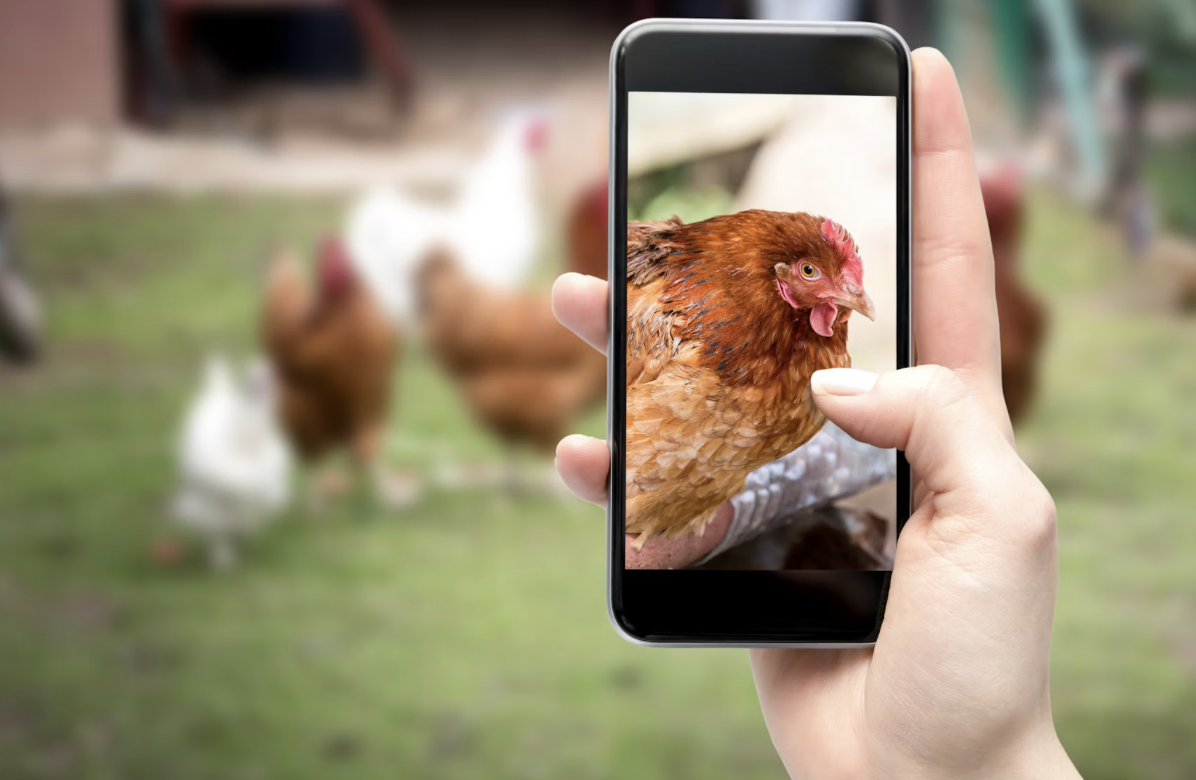
The future of Salmonella detection in poultry barns could be as easy as taking a picture with your smartphone, according to early concept research at the University of Georgia. Salmonella is one of the leading causes of foodborne illness in the U.S., causing symptoms such as diarrhea, fever and stomach cramps, and poultry products are recognized as one of the primary sources of human infections. Detecting the pathogen quickly on farms is critical for improving food safety and keeping contamination out of the supply chain.
The current standard for on-farm detection involves collecting litter or fecal samples and sending them to a lab for microbiological testing. The method is accurate, but its labor-intensive, costly nature and multi-day turnaround pushed Guoming Li, assistant professor in the Department of Poultry Science and the Institute for Artificial Intelligence at the University of Georgia, and Adelumola Oladeinde, research microbiologist in the U.S. Department of Agriculture (USDA) Agricultural Research Service (ARS) National Poultry Research Center, to look into whether AI and computer vision could offer a quicker, more practical alternative.
One goal: Earlier Salmonella detection
The project had two main objectives: developing an AI system that predicts Salmonella presence from smartphone images of poultry feces on the litter floor, and testing whether changes in bird movement could serve as a behavioral indicator of infection. The AI model performed strongly when trained and tested on fecal images from the same geographic region, achieving greater than 93% accuracy. But when applied to images from a different region, accuracy fell sharply to between 40% and 60%, underscoring how environmental and regional differences can affect model performance. “We were able to validate part of it, but we still need to think of features to enhance the detection and improve the accuracy,” Li cautioned, adding that the model shows promise, but isn’t quite ready for the real world yet.
Distinguishing Salmonella from other diseases adds another layer of difficulty, since several conditions also produce color, wateriness or blood content in bird feces. "Some diseases share the same feces characteristic," Li said, calling it one of the key problems still to solve. Separately, the researchers found that healthy chicks maintained normal circadian activity cycles, while Salmonella-infected birds showed measurable differences in movement patterns. This suggests continuous behavioral monitoring could eventually serve as an additional digital biomarker for infection.
Open access and what's next
The research team has made its software code and smartphone application publicly available on GitHub, allowing other industry and technology developers to build on the platform. The team is now working to secure additional USDA ARS funding and beyond to improve camera resolution, expand data collection and close the regional accuracy gap. Li and Oladeinde also hope to partner with industry to access commercial farm data, which he expects would show higher Salmonella prevalence than the controlled research pens currently used. But standardizing data collection in the commercial farms and controlling variations of image data should not be neglected, they added.
The research was funded by the U.S. Poultry & Egg Association and USDA ARS.
.png)